

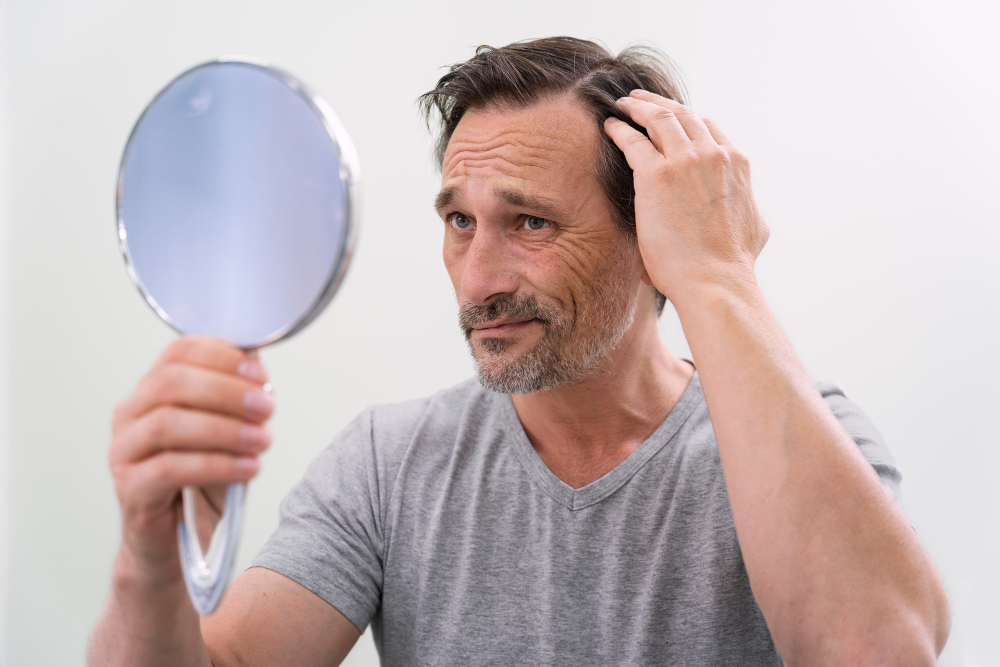
Hair Restoration With PRP in Mount Kisco, NY
PRP (platelet-rich plasma) hair treatment uses a concentration of your own platelets to stimulate hair follicles and promote hair growth. At Briones Weight Loss Center, Dr. Maria Briones offers this non-surgical option for men and women with early to moderate hair thinning who want fuller, healthier-looking hair.
How PRP Hair Restoration Works
Platelet-rich plasma contains a high concentration of growth factors that play a key role in tissue repair. When injected into the scalp, these growth factors help stimulate hair follicles, increase hair thickness, and reduce hair fall. Because PRP comes from your own blood, it is a natural, non-surgical option for thinning hair.
- A small amount of your blood is drawn, similar to routine lab work.
- The sample is placed in a centrifuge to separate the platelets from other blood components.
- The concentrated PRP is injected directly into areas of the scalp where hair growth is desired.
The Procedure
- Treatment is performed in our office and usually takes 30 minutes to an hour.
- The scalp is often numbed with a local anesthetic to minimize discomfort.
- Most patients start with a series of three to four sessions spaced a few weeks apart.
- Maintenance treatments are recommended periodically, often every six to 12 months.
Before and After Treatment
Before: Shower and wash your hair thoroughly on the day of treatment, but avoid styling products. Eat a normal meal and drink plenty of water beforehand. Avoid steroid injections in the scalp for one month before your appointment.
After: You can return to normal activities right away, as there is typically no downtime. Some patients notice temporary swelling, tenderness at the injection sites, or a small bruise where blood was drawn.
Who Is a Good Candidate?
PRP is best for people experiencing hair thinning rather than complete baldness, and it is most effective for hair loss that started more recently. It can help men and women with pattern hair loss, as well as women with thinning related to menopause or PCOS. Dr. Briones may also check hormone and nutrient levels, since hormone balance and nutrition affect hair health.
Cost
PRP is typically an out-of-pocket expense and is not covered by health insurance. Total cost depends on the number of sessions you need. We will review pricing during your consultation. Learn about an ongoing session plan on our PRP hair page, or pair hair restoration with a PRP facial, Morpheus8, or IV therapy. See all services.
Hair Restoration With PRP FAQs
What is PRP hair restoration?
PRP hair restoration uses platelet-rich plasma from your own blood to stimulate hair follicles and promote thicker, healthier hair.
Does PRP hair treatment hurt?
The scalp is usually numbed with a local anesthetic, so most patients feel only mild pressure or discomfort.
How many sessions will I need?
Most patients need three to four initial sessions spaced a few weeks apart, followed by maintenance every six to 12 months.
When will I see results?
Many patients notice reduced shedding within a few months, with improved thickness developing over three to six months.
Is there downtime after PRP?
No. You can return to normal activities immediately. Mild swelling or tenderness may occur for a day or two.
Is PRP covered by insurance?
PRP hair restoration is typically an out-of-pocket expense and not covered by insurance.
How do I schedule a PRP consultation?
Call Briones Weight Loss Center at (914) 241-6249 or request an appointment online.
Start Restoring Your Hair
The earlier you treat thinning hair, the better your results. Call Briones Weight Loss Center at (914) 241-6249 or request a consultation online.